
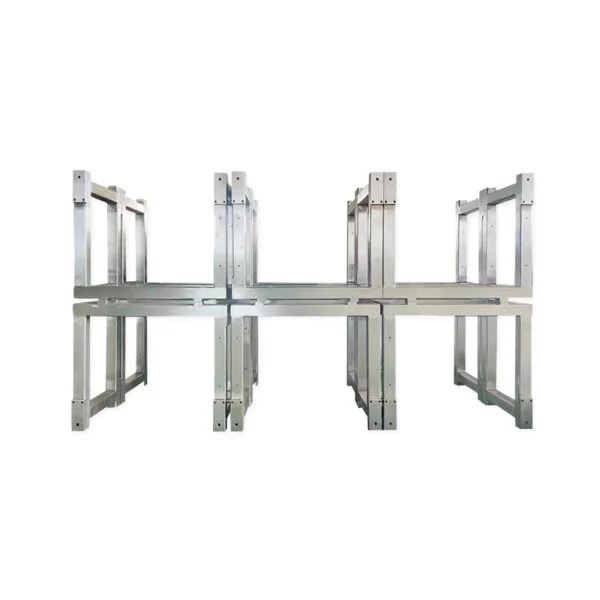
Modern industries need materials that can handle demanding environments while maintaining strength, appearance, and performance. Stainless steel is widely chosen for these reasons. Through stainless steel fabrication, raw stainless steel can be transformed into custom structures, components, equipment, and assemblies designed for specific applications.
Unlike standard metal products, fabricated stainless steel can be produced according to precise dimensions and project requirements. This makes it useful across manufacturing, construction, food processing, industrial equipment, architecture, and many other sectors. Newtop Industry Group supports manufacturing projects where material quality, accurate fabrication, and dependable results are important.
What Is Stainless Steel Fabrication?
Stainless steel fabrication is the process of cutting, shaping, joining, and finishing stainless steel to create a finished product or component.
A fabrication project may involve several operations depending on the design. These can include:
- Cutting sheets, plates, tubes, or bars
- Drilling and machining
- Bending and forming
- Welding
- Grinding and polishing
- Deburring
- Surface finishing
- Inspection and quality control
The goal is to transform raw stainless steel into a product that matches the required dimensions, appearance, and functional requirements.
Because stainless steel behaves differently from ordinary carbon steel during cutting and welding, fabricators need suitable equipment, tooling, techniques, and experience.
Why Stainless Steel Is Ideal for Fabrication
Stainless steel is valued for its combination of strength, corrosion resistance, appearance, and versatility.
One of its biggest advantages is its resistance to corrosion. The chromium content in stainless steel helps create a protective passive layer on the surface. This layer can help the material resist rust and environmental damage under suitable conditions.
Stainless steel can also offer:
- Excellent durability
- Good strength-to-weight performance
- Attractive appearance
- Easy cleaning
- Resistance to many corrosive environments
- Long service life
- Compatibility with different fabrication methods
Therefore, it is often selected when both performance and appearance matter.
Common Stainless Steel Grades
Not every stainless steel grade performs the same way. Choosing the correct grade is important because the material must match the environment and application.
304 Stainless Steel
304 is one of the most commonly used stainless steel grades. It provides good corrosion resistance and fabrication characteristics.
It is frequently considered for:
- Food-processing equipment
- Kitchen equipment
- Architectural components
- Industrial enclosures
- General fabrication
316 Stainless Steel
316 stainless steel offers improved resistance to certain corrosive environments compared with 304. It is often considered for applications involving moisture, chemicals, salt exposure, or demanding industrial conditions.
430 Stainless Steel
430 is a ferritic stainless steel that can be suitable for applications where moderate corrosion resistance and appearance are required.
The right grade should be selected based on factors such as exposure, temperature, mechanical requirements, cleaning conditions, and budget.
Major Processes in Stainless Steel Fabrication
A successful fabrication project usually combines several manufacturing processes.
Cutting
The first step is often cutting the stainless steel to the required size.
Depending on thickness and project requirements, manufacturers may use:
- Laser cutting
- Plasma cutting
- Waterjet cutting
- Saw cutting
- Shearing
Laser cutting, for example, can produce detailed profiles and accurate edges on suitable sheet and plate materials.
Bending and Forming
Stainless steel sheets and plates can be formed into specific shapes using press brakes, rollers, and other equipment.
Accurate bending is important because incorrect angles can affect the final assembly.
Manufacturers need to consider material thickness, bend radius, grade, and springback during the forming process.
Welding
Welding is a major part of stainless steel fabrication. It allows separate pieces to be joined into a larger structure or assembly.
Common welding methods include:
- TIG welding
- MIG welding
- Stick welding
- Specialized automated welding processes
TIG welding is often used when a clean and controlled weld is required, particularly for thinner materials or applications where appearance matters.
Grinding and Polishing
After welding, stainless steel components may require grinding, blending, or polishing.
These processes can help:
- Remove unwanted weld marks
- Smooth sharp edges
- Improve surface appearance
- Prepare surfaces for specific finishes
The desired finish should be discussed before fabrication because different surface treatments require different production methods.
Applications of Stainless Steel Fabrication
The versatility of stainless steel makes it useful across many industries.
Food and Beverage Equipment
Food-processing environments often require materials that are easy to clean and resistant to corrosion.
Fabricated stainless steel can be used for:
- Processing tables
- Tanks
- Frames
- Counters
- Equipment housings
- Guards and supports
The material’s clean appearance and corrosion resistance make it a popular choice for many food-related applications.
Industrial Equipment
Factories and processing facilities may need custom stainless steel platforms, brackets, enclosures, frames, pipes, guards, and equipment components.
Custom fabrication is especially useful when standard components do not fit an existing production layout.
Architectural Applications
Stainless steel can add both functionality and visual appeal to architectural projects.
It may be used for:
- Railings
- Handrails
- Decorative panels
- Structural details
- Canopies
- Custom fixtures
Its clean appearance can complement modern architectural designs.
Medical and Laboratory Environments
Certain medical and laboratory environments require materials that can be cleaned easily and maintain a durable surface.
Depending on the application and applicable standards, fabricated stainless steel may be used for equipment frames, cabinets, tables, enclosures, and specialized components.
Chemical and Industrial Applications
Stainless steel can be useful in environments where corrosion resistance is important. The specific grade must be selected carefully based on the chemicals, temperatures, and operating conditions involved.
Benefits of Custom Stainless Steel Fabrication
Choosing a custom approach offers several advantages.
Precise Fit
Custom components can be manufactured according to specific dimensions. This is useful when a part must fit into an existing machine, structure, or production system.
Long-Term Durability
With the correct grade and proper fabrication, stainless steel can provide long service life in many demanding environments.
Corrosion Resistance
Stainless steel is naturally resistant to corrosion in many conditions. However, performance depends on grade, environment, surface condition, and maintenance.
Easy Maintenance
Many stainless steel surfaces are relatively easy to clean. This is particularly valuable in industries where hygiene and regular cleaning are important.
Professional Appearance
A polished or properly finished stainless steel surface can provide a clean and professional appearance, making the material useful for both functional and visible components.
Quality Control in Stainless Steel Fabrication
Quality control should be part of every fabrication project, not an afterthought.
Manufacturers may inspect:
- Material grade
- Overall dimensions
- Bend angles
- Weld quality
- Hole locations
- Surface finish
- Alignment
- Assembly fit
Weld inspection is particularly important for structural and load-bearing applications.
For critical projects, customers may also require specific inspection procedures or documentation. Clear quality requirements should be discussed before production starts.
Newtop Industry Group understands that fabrication quality depends on more than appearance. Accurate dimensions, appropriate materials, proper joining methods, and careful inspection all contribute to the performance of the final component.
How to Plan a Stainless Steel Fabrication Project
Good planning can reduce production problems and unnecessary costs.
Before fabrication begins, provide clear information about:
- Material grade
- Material thickness
- Engineering drawings
- CAD files
- Dimensions
- Tolerances
- Weld requirements
- Surface finish
- Quantity
- Installation conditions
It is also important to explain how the finished product will be used.
For example, a stainless steel enclosure used outdoors may require different material and finishing considerations from a decorative indoor component. Similarly, equipment used in a food-processing environment may have specific cleaning and hygiene requirements.
The more clearly these factors are defined, the easier it becomes to select the right manufacturing approach.
Stainless Steel Fabrication vs. Standard Metal Fabrication
Stainless steel and carbon steel can both be fabricated effectively, but they have different characteristics.
Stainless steel generally offers better corrosion resistance and a distinctive appearance. Carbon steel, meanwhile, can provide high strength at a competitive cost and is widely used for structural applications.
The choice should therefore depend on the actual project requirements.
Consider factors such as:
- Environmental exposure
- Required corrosion resistance
- Mechanical loads
- Appearance
- Maintenance
- Material cost
- Expected service life
Choosing the most expensive material is not always the best solution. The ideal choice is the material that provides the required performance without unnecessary cost.
Improving Efficiency and Controlling Costs
Custom fabrication does not have to be unnecessarily expensive. Early design decisions can make a significant difference.
Businesses can improve efficiency by:
- Providing complete drawings
- Selecting realistic tolerances
- Using standard material sizes where practical
- Reducing unnecessary bends
- Designing for efficient welding
- Planning quantities carefully
- Discussing manufacturability before production
For instance, extremely tight tolerances can increase machining and inspection time. If a particular dimension does not require a very tight tolerance, using a practical specification can help control manufacturing costs.
The Future of Stainless Steel Fabrication
Manufacturing technology continues to improve. Digital CAD systems, CNC cutting equipment, automated welding, advanced inspection tools, and production software are helping fabrication companies improve accuracy and efficiency.
At the same time, customers increasingly expect products that combine durability, attractive design, efficient production, and long service life.
As a result, stainless steel fabrication is becoming more closely connected with digital engineering and modern manufacturing workflows.
The combination of skilled fabrication and advanced technology allows manufacturers to handle increasingly detailed designs while maintaining consistent production standards.
Choosing the Right Fabrication Partner
The success of a stainless steel project depends heavily on the capabilities of the fabrication partner.
Before choosing a supplier, consider:
- Experience with stainless steel
- Available cutting and forming equipment
- Welding capabilities
- Engineering support
- Quality inspection procedures
- Material knowledge
- Custom production experience
- Communication and project management
A capable supplier should also be willing to discuss design details before production. This can help identify potential issues related to material selection, welding, tolerances, finishing, or assembly.
Newtop Industry Group takes a practical approach to manufacturing by focusing on project specifications and production requirements. This helps customers move from design concepts toward finished components with greater clarity and confidence.
Final Thoughts
Stainless steel fabrication offers an effective way to create durable, corrosion-resistant, accurate, and visually appealing components for a wide range of industries. From food-processing equipment and industrial machinery to architectural features and custom assemblies, stainless steel provides valuable flexibility.
However, successful fabrication requires more than simply choosing stainless steel. Material grade, design, cutting, forming, welding, finishing, and inspection all influence the final result.
For businesses planning a custom stainless steel project, working with an experienced manufacturing partner can simplify the process and help avoid common production challenges. Newtop Industry Group can support businesses looking for practical fabrication solutions based on their specific requirements.
If you have a stainless steel component, structure, or custom fabrication project in mind, starting with clear drawings and detailed specifications is a smart first step toward a reliable finished product.