
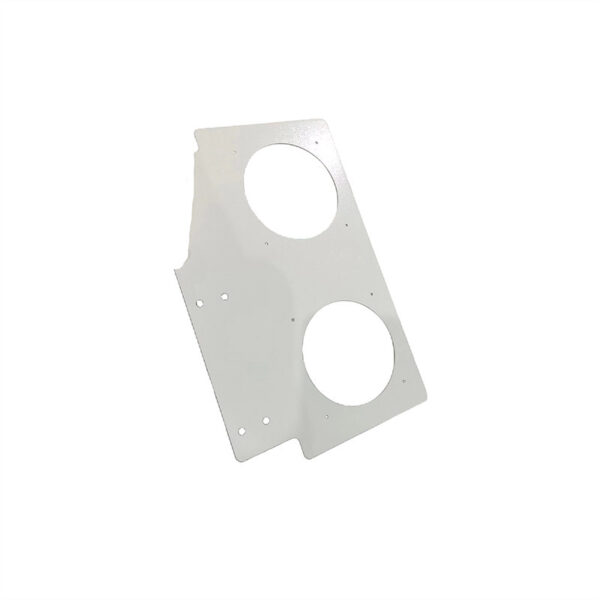
Modern manufacturing depends on components that are accurate, reliable, and built to perform under demanding conditions. This is where precision metal products become essential. From machine components and brackets to custom housings and engineered assemblies, these products support smooth operation across many industries.
For manufacturers, precision is not only about achieving a specific dimension. It also affects product performance, assembly speed, durability, and long-term operating costs. Therefore, choosing the right manufacturing process and supplier can have a direct impact on overall production results. Newtop Industry Group focuses on dependable manufacturing solutions that help businesses meet exact technical requirements while maintaining consistent quality.
Why Precision Matters in Metal Manufacturing
Small dimensional errors can create major problems in a finished product. A hole may not align correctly, a component may fail to fit, or moving parts may experience unnecessary friction. As a result, manufacturers can face delays, rework, material waste, and higher costs.
Precision manufacturing reduces these risks by controlling dimensions, tolerances, surface quality, and overall consistency. In addition, accurate metal components make assembly easier because parts are designed to work together without unnecessary adjustment.
The value of precision metal products becomes especially clear when a component must perform repeatedly. A part that looks acceptable during initial inspection may still cause problems if its dimensions vary from one batch to another. Consistency, therefore, is just as important as accuracy.
What Are Precision Metal Products?
Precision metal products are components manufactured to meet specific dimensional and performance requirements. They can be simple parts or highly engineered components used inside larger systems.
Common examples include:
- CNC-machined components
- Metal brackets and supports
- Custom shafts and pins
- Precision housings
- Mounting plates
- Industrial hardware
- Mechanical assemblies
- Fabricated structural components
- Custom metal enclosures
Depending on the application, manufacturers may use stainless steel, carbon steel, aluminum, brass, or other engineered materials. Each material offers different advantages related to strength, weight, corrosion resistance, machinability, and cost.
Furthermore, production methods can vary from CNC machining and sheet metal fabrication to laser cutting, bending, welding, and finishing. The right combination depends on the design and intended use of the component.
Key Benefits of Precision Metal Products
Better Dimensional Accuracy
One of the biggest advantages is improved dimensional control. Accurate components fit together more reliably, reducing the chance of assembly problems.
For example, if a machine contains multiple moving parts, each component must work within a defined tolerance range. A small deviation can affect the entire mechanism. Precision production helps keep these variations under control.
Improved Product Performance
A well-made component can improve the performance of the complete product. Properly machined surfaces can reduce friction, while accurate holes and mounting points help maintain alignment.
As a result, manufacturers can build products that operate more smoothly and consistently.
Lower Material Waste
Precision manufacturing can also help reduce waste. When parts are produced according to accurate specifications, fewer pieces need to be rejected or remade.
This is particularly valuable for businesses producing components in medium or high volumes. Over time, even a small reduction in waste can create meaningful savings.
Consistent Batch Quality
A successful manufacturing process should deliver repeatable results. Customers need confidence that a component made today will perform like one produced in the next production run.
This is why process control, inspection, tooling, and manufacturing experience matter. Consistency supports quality assurance and helps businesses maintain reliable production schedules.
Greater Durability
Material selection and accurate production work together to improve durability. A component made from the correct metal and manufactured to the right specifications is more likely to handle its intended load and operating environment.
Therefore, precision metal products can contribute to longer service life and fewer unexpected failures.
Applications Across Different Industries
Precision metal components are used in a wide range of industries because almost every mechanical or industrial system depends on reliable parts.
Automotive Manufacturing
Automotive applications require components that meet tight specifications. Precision-made brackets, mounts, shafts, connectors, and structural parts can support vehicle performance and assembly efficiency.
Moreover, repeatable dimensions are important when thousands of components must be assembled into the same product.
Industrial Equipment
Industrial machines often operate for long periods under demanding conditions. Components used in these systems must withstand vibration, pressure, movement, and repeated loads.
For this reason, precision components are widely used in machinery frames, drive systems, tooling, enclosures, and support assemblies.
Electronics and Electrical Equipment
Electrical equipment often requires compact metal parts with accurate dimensions. Housings, mounting components, brackets, shielding parts, and structural elements all benefit from controlled manufacturing.
Accurate production also helps when several parts must fit inside limited spaces.
Construction and Infrastructure
Construction equipment and structural systems rely on strong metal components. Precision-fabricated brackets, plates, connectors, supports, and custom assemblies can improve installation accuracy and overall reliability.
Medical and Specialized Equipment
Specialized equipment often requires close dimensional control and high manufacturing consistency. Depending on the application, components may also require suitable finishes, corrosion resistance, or strict inspection procedures.
Manufacturing Processes Behind Precision Components
Producing high-quality components requires more than advanced machinery. It also requires the right process for the material, design, and production volume.
CNC Machining
CNC machining is widely used when parts require detailed features and controlled tolerances. Computer-guided equipment can produce complex geometries with consistent results.
The process is suitable for prototypes as well as repeat production, depending on the design and quantity.
Laser Cutting
Laser cutting provides fast and accurate cutting for many sheet metal applications. It can create clean profiles while supporting efficient material use.
This process is often combined with bending, welding, or finishing to create complete assemblies.
Sheet Metal Bending
Bending transforms flat metal sheets into useful shapes such as panels, brackets, channels, and enclosures. Accurate bend positions are essential for proper assembly.
For that reason, tooling selection and process setup play an important role in final part quality.
Welding and Fabrication
Some projects require multiple metal pieces to be joined into one assembly. Welding and fabrication can create strong structures while allowing manufacturers to produce customized designs.
However, proper control is important because heat can affect dimensions and shape. Skilled fabrication helps maintain the required geometry.
How to Choose the Right Manufacturing Partner
Selecting a manufacturing partner should involve more than comparing prices. A supplier should understand the design, material, tolerance requirements, production volume, and intended application.
Consider these factors:
- Manufacturing capabilities
- Material options
- Quality inspection methods
- Production capacity
- Experience with similar components
- Finishing and secondary processes
- Communication and technical support
- Ability to meet delivery requirements
It is also useful to review how a supplier manages consistency from prototype to production. A component may look excellent in a sample run, but reliable batch production requires strong process control.
Newtop Industry Group approaches metal manufacturing with a focus on practical production needs, precise specifications, and dependable results. This can be valuable for businesses seeking a manufacturing partner for custom and industrial components.
The Role of Quality Control
Quality control is a critical part of precision manufacturing. Inspection helps verify whether parts meet the required dimensions, finish, and functional specifications.
Depending on the project, quality checks may include:
- Dimensional inspection
- Visual inspection
- Surface finish checks
- Material verification
- Assembly checks
- Sampling during production
- Final inspection
Early inspection can also help identify process problems before they affect a large production batch. Consequently, manufacturers can reduce rework and maintain better control over costs.
For precision metal products, quality control should be treated as part of the manufacturing process rather than as a final step only.
How Precision Components Improve Overall Efficiency
Manufacturing efficiency is influenced by many small factors. Accurate components can improve several of them at once.
First, better-fitting parts can speed up assembly. Next, consistent dimensions can reduce adjustments and rework. Also, durable components can reduce the frequency of replacement.
For example, imagine a machine manufacturer that produces thousands of units each year. If every assembly requires manual correction because of inconsistent components, labor costs can rise quickly. In contrast, well-controlled parts can make production more predictable.
As a result, investing in quality at the component level can support efficiency across the entire manufacturing workflow.
Making the Most of Custom Metal Manufacturing
Every project has different requirements. A standard component may work for one application but fail to meet the needs of another. Custom manufacturing provides a way to create parts around the actual design.
A strong custom manufacturing process usually begins with clear drawings, accurate specifications, material selection, and production planning.
It is also important to consider manufacturability early. A design that looks ideal on paper may be difficult or expensive to produce. By discussing the design with an experienced manufacturer, companies can often identify opportunities to simplify the part without reducing performance.
Newtop Industry Group can support businesses that need practical solutions for custom metal component manufacturing and production requirements.
Future Trends in Precision Metal Manufacturing
Manufacturing continues to become more connected and data-driven. Automation, digital design tools, advanced CNC systems, and improved inspection technology are changing how metal components are produced.
At the same time, customers are placing greater emphasis on consistency, shorter lead times, efficient material use, and dependable quality.
Therefore, manufacturers that combine technical expertise with modern production methods are better positioned to respond to changing market demands.
The future of precision metal products will likely involve even greater automation, tighter process monitoring, and smarter production planning. These developments can help manufacturers deliver better quality while controlling production costs.
Final Thoughts
Reliable metal components form the foundation of many modern products and industrial systems. When dimensions, materials, finishes, and production methods are properly controlled, manufacturers can achieve better fit, performance, durability, and efficiency.
That is why precision metal products are more than individual components. They are an important part of a dependable manufacturing strategy. From CNC-machined parts and fabricated assemblies to custom industrial components, precision helps businesses build products that meet real-world demands. Newtop Industry Group understands the importance of accurate manufacturing, consistent quality, and practical engineering solutions. For businesses planning their next custom metal project, working with an experienced manufacturing partner can make the process more efficient and dependable.