
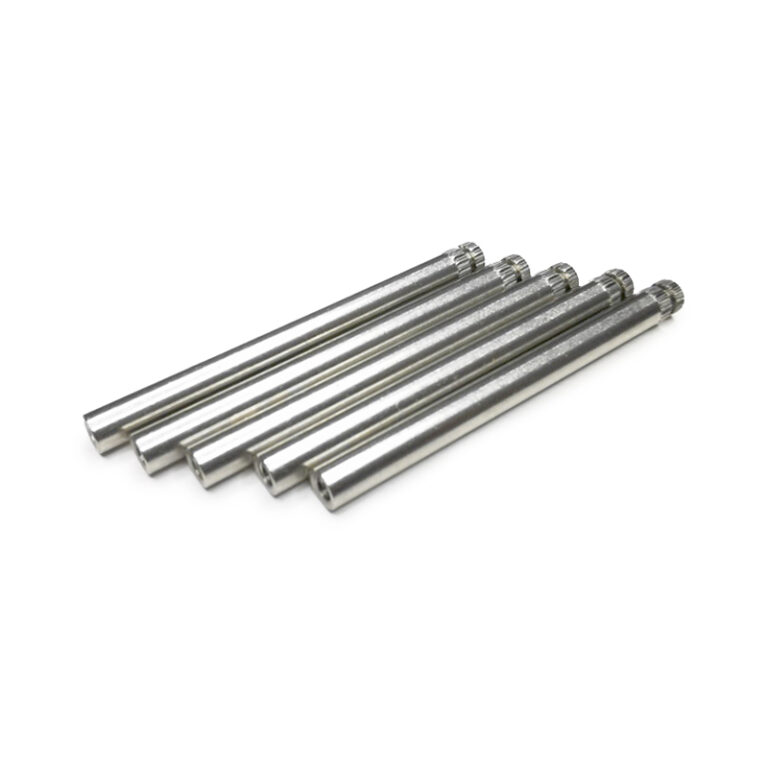
Manufacturing industries rely on precision, consistency, and speed to stay competitive. As product designs become more complex, businesses need reliable components that meet strict quality standards. This is where cnc precision machining parts play a vital role. These components are produced with advanced computer-controlled machines that deliver exceptional accuracy and repeatability.
Newtop Industry Group has established itself as a trusted manufacturing partner by providing high-quality machining solutions for various industries. From automotive and aerospace applications to electronics and medical equipment, precision-machined components support countless products used every day.
In this article, we will explore the importance of CNC machining, its benefits, applications, materials, and key factors to consider when selecting a manufacturing partner.
Understanding CNC Precision Machining
What Is CNC Machining?
CNC stands for Computer Numerical Control. It is a manufacturing process where computer software controls machine tools such as mills, lathes, grinders, and routers.
Unlike manual machining, CNC technology follows programmed instructions with remarkable precision. As a result, manufacturers can create complex components with tight tolerances and consistent quality.
The process is widely used for producing cnc precision machining parts because it reduces human error and improves production efficiency.
How CNC Precision Machining Works
The CNC machining process generally involves several steps:
- Product design using CAD software.
- Conversion of the design into machine-readable instructions.
- Material selection.
- Machine setup and calibration.
- Precision cutting, drilling, milling, or turning.
- Inspection and quality control.
Because each step is carefully controlled, the final product matches the original design specifications with outstanding accuracy.
Benefits of CNC Precision Machining Parts
Exceptional Accuracy
One of the biggest advantages of cnc precision machining parts is their high level of precision.
Modern CNC machines can achieve extremely tight tolerances, making them suitable for industries where even small deviations can affect performance.
For example:
- Aerospace components require exact dimensions.
- Medical devices demand consistent quality.
- Automotive systems rely on accurate fitting parts.
Therefore, precision machining helps ensure product reliability and safety.
Consistent Quality
Consistency is essential in manufacturing. CNC systems produce identical components repeatedly without significant variation.
This consistency offers several advantages:
- Reduced product defects
- Better assembly performance
- Improved customer satisfaction
- Lower quality control costs
As a result, manufacturers can maintain high production standards across large volumes.
Faster Production
Traditional machining methods often require significant manual intervention. In contrast, CNC machines operate automatically once programmed.
Consequently, production becomes faster and more efficient. Businesses can meet deadlines more effectively while maintaining quality standards.
Furthermore, automated processes reduce downtime and improve overall productivity.
Cost-Effective Manufacturing
Although CNC equipment requires significant investment, it often lowers production costs over time.
Benefits include:
- Reduced material waste
- Lower labor requirements
- Fewer production errors
- Improved operational efficiency
These factors contribute to a better return on investment for manufacturers.
Industries That Use CNC Precision Machining Parts
Aerospace Industry
Aircraft components must meet strict safety and performance standards. CNC machining enables the production of highly accurate parts that perform reliably under extreme conditions.
Common aerospace components include:
- Engine parts
- Structural components
- Landing gear components
- Precision brackets
Because precision is critical, the aerospace sector heavily depends on advanced machining technologies.
Automotive Industry
Modern vehicles contain thousands of individual components. Many of these are manufactured using CNC processes.
Examples include:
- Transmission parts
- Brake system components
- Engine housings
- Suspension parts
The use of cnc precision machining parts helps improve vehicle performance, safety, and durability.
Medical Industry
Medical equipment manufacturers require precise and reliable components.
CNC machining supports the production of:
- Surgical instruments
- Implant components
- Diagnostic equipment parts
- Medical device housings
Since patient safety depends on product quality, precision manufacturing is essential.
Electronics Industry
Electronic devices continue to become smaller and more advanced.
Precision machining helps produce:
- Connectors
- Heat sinks
- Enclosures
- Circuit board components
As technology evolves, demand for highly accurate components continues to grow.
Industrial Equipment Manufacturing
Factories and production facilities rely on machinery that operates continuously.
Precision-machined components contribute to:
- Equipment reliability
- Reduced maintenance requirements
- Improved production efficiency
Therefore, industrial manufacturers frequently invest in high-quality machining solutions.
Common Materials Used in CNC Machining
Aluminum
Aluminum is one of the most popular machining materials because it is:
- Lightweight
- Corrosion-resistant
- Easy to machine
- Cost-effective
It is widely used in aerospace, automotive, and electronics applications.
Stainless Steel
Stainless steel offers excellent strength and durability.
Advantages include:
- Corrosion resistance
- Long service life
- High mechanical strength
This material is commonly used in medical and industrial applications.
Brass
Brass provides excellent machinability and attractive surface finishes.
Manufacturers often choose brass for:
- Electrical components
- Valves
- Fittings
- Decorative parts
Titanium
Titanium is known for its exceptional strength-to-weight ratio.
It is frequently used in:
- Aerospace components
- Medical implants
- High-performance industrial equipment
Although more challenging to machine, titanium offers outstanding performance benefits.
Engineering Plastics
Many industries also require plastic components.
Popular options include:
- PEEK
- Nylon
- Delrin
- PTFE
These materials offer lightweight performance and resistance to chemicals and wear.
Quality Control in CNC Precision Machining
Importance of Inspection
Even the most advanced machinery requires proper quality control procedures.
Manufacturers inspect cnc precision machining parts to verify:
- Dimensions
- Surface finish
- Material properties
- Functional performance
This process helps identify issues before products reach customers.
Advanced Measurement Technologies
Modern quality control systems use advanced tools such as:
- Coordinate Measuring Machines (CMM)
- Optical inspection systems
- Laser measurement devices
- Digital gauges
These technologies improve accuracy and ensure compliance with customer specifications.
Documentation and Traceability
Many industries require detailed production records.
Proper documentation helps manufacturers:
- Track production history
- Verify material sources
- Meet regulatory requirements
- Improve process consistency
As a result, traceability has become a key component of modern manufacturing.
Choosing the Right CNC Machining Partner
Experience and Technical Expertise
A manufacturing partner should have extensive industry knowledge and technical capabilities.
Look for companies with:
- Skilled engineering teams
- Modern equipment
- Proven project experience
- Strong quality management systems
Newtop Industry Group focuses on delivering precision manufacturing solutions that support diverse industry requirements.
Production Capacity
Manufacturing needs can vary significantly from one project to another.
A reliable supplier should offer:
- Prototype production
- Small-batch manufacturing
- Large-scale production runs
This flexibility allows businesses to scale operations efficiently.
Material Capabilities
Different projects require different materials.
Therefore, manufacturers should have expertise in machining:
- Metals
- Alloys
- Engineering plastics
- Specialty materials
A broad range of capabilities ensures greater project flexibility.
Commitment to Quality
Quality should always remain a top priority.
When evaluating suppliers, consider:
- Inspection procedures
- Certifications
- Process controls
- Customer feedback
These factors often indicate a company’s commitment to excellence.
Future Trends in CNC Precision Machining
Automation and Smart Manufacturing
Advanced automation is transforming modern production facilities.
Smart manufacturing technologies provide:
- Real-time monitoring
- Predictive maintenance
- Improved productivity
- Enhanced process control
Consequently, machining operations continue to become more efficient.
Artificial Intelligence Integration
AI-powered systems help optimize machining processes by analyzing production data.
Benefits include:
- Reduced downtime
- Better quality control
- Faster decision-making
- Improved efficiency
As technology advances, AI will play an even greater role in manufacturing.
Sustainable Manufacturing Practices
Environmental responsibility is becoming increasingly important.
Many manufacturers are adopting:
- Energy-efficient equipment
- Material recycling programs
- Waste reduction initiatives
- Sustainable production methods
These practices support both operational efficiency and environmental goals.
Conclusion
The demand for cnc precision machining parts continues to grow as industries seek higher levels of accuracy, consistency, and efficiency. From aerospace and automotive manufacturing to medical devices and electronics, precision-machined components are essential for producing reliable products.
By combining advanced technology, skilled engineering, and rigorous quality control, Newtop Industry Group helps businesses meet modern manufacturing challenges with confidence. Whether you need prototypes, custom components, or large-scale production solutions, working with an experienced partner can significantly improve product quality and operational performance.