
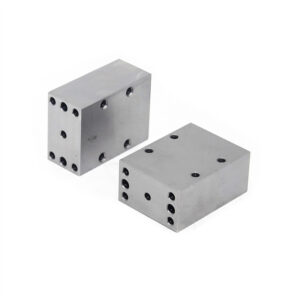
Modern manufacturing demands extreme accuracy, consistency, and efficiency. As products become more complex and quality expectations rise, manufacturers increasingly rely on advanced production methods that can deliver repeatable precision at scale. One of the most influential technologies meeting these demands is cnc precision machining, which has transformed how components are designed, produced, and delivered across industries.
This advanced manufacturing process uses computer-controlled machines to shape raw materials into highly accurate parts. From aerospace to healthcare, its applications span nearly every sector that values tight tolerances, durability, and performance. Below is an in-depth look at the top applications of CNC precision machining across various industries and why it has become a cornerstone of modern production.
Aerospace Industry
The aerospace sector places some of the strictest demands on manufacturing. Components must meet exact specifications while withstanding extreme temperatures, pressure changes, and mechanical stress. Even the smallest deviation can impact safety and performance.
CNC machining is widely used to produce engine components, landing gear parts, airframe structures, turbine blades, and housings. Materials such as titanium, aluminum alloys, and high-performance composites are commonly machined due to their strength-to-weight ratios.
The ability of CNC systems to maintain micron-level tolerances ensures consistency across batches, which is critical for aerospace certification and regulatory compliance. Additionally, CNC machining supports rapid prototyping, enabling engineers to test and refine designs before full-scale production.
Automotive Manufacturing
The automotive industry relies heavily on precision, speed, and scalability. From mass-produced vehicles to high-performance and electric cars, manufacturers need reliable methods to create complex components efficiently.
CNC machining is used to produce engine blocks, transmission parts, brake components, suspension systems, and custom interior elements. Its flexibility allows manufacturers to switch between designs quickly, supporting both high-volume production and low-volume custom parts.
As electric vehicles continue to grow in popularity, CNC machining plays a key role in producing battery housings, motor components, and lightweight structural parts that improve efficiency and range.
Medical and Healthcare Sector
In the medical field, accuracy is not just important—it is essential. Components used in medical devices and implants must meet strict quality standards and often require biocompatible materials.
CNC machining is widely applied in the production of surgical instruments, orthopedic implants, dental components, prosthetics, and diagnostic equipment. Materials such as stainless steel, titanium, cobalt-chrome alloys, and medical-grade plastics are commonly used.
One major advantage is the ability to produce highly customized parts, such as patient-specific implants, while maintaining exceptional surface finishes and dimensional accuracy. This level of precision supports better patient outcomes and device reliability.
Electronics and Electrical Industry
The electronics industry thrives on miniaturization and precision. As devices become smaller and more powerful, the components inside them must be manufactured with extreme care.
CNC machining is used to produce enclosures, heat sinks, connectors, brackets, and semiconductor equipment components. Tight tolerances help ensure proper fit and alignment, which is crucial for thermal management and electrical performance.
In addition, CNC machining supports rapid innovation by allowing manufacturers to quickly prototype new designs and bring products to market faster without sacrificing quality.
Industrial Machinery and Equipment
Heavy-duty industrial machinery requires strong, durable components that can withstand continuous operation under demanding conditions. CNC machining is essential for producing gears, shafts, valves, bearings, hydraulic components, and custom machine parts.
These components often require machining from hardened steels and other tough materials. CNC systems excel in maintaining consistency and structural integrity, even when producing complex geometries.
The result is machinery that operates more efficiently, lasts longer, and requires less maintenance—key advantages for industries such as manufacturing, construction, and energy.
Defense and Military Applications
Defense manufacturing requires a balance of precision, durability, and confidentiality. CNC machining is frequently used to produce weapon components, armored vehicle parts, communication equipment housings, and aerospace defense systems.
The technology allows manufacturers to meet stringent military specifications while maintaining repeatability across production runs. Additionally, CNC machining supports the use of advanced materials designed for strength, heat resistance, and impact protection.
Because designs can be securely programmed and reproduced accurately, CNC machining helps ensure consistency and reliability in mission-critical applications.
Oil and Gas Industry
The oil and gas sector operates in some of the harshest environments on the planet. Equipment must endure high pressures, corrosive substances, and extreme temperatures, often for extended periods.
CNC machining is used to manufacture drilling components, valves, flanges, pump parts, and pipeline fittings. These components are typically machined from high-strength alloys and corrosion-resistant materials.
Precision machining ensures proper sealing, alignment, and performance, which reduces the risk of leaks, failures, and costly downtime in energy operations.
Consumer Products and Appliances
Many everyday products rely on CNC machining, even if consumers are unaware of it. Household appliances, sporting goods, furniture components, and premium consumer electronics often include CNC-machined parts.
The technology allows manufacturers to achieve clean finishes, smooth edges, and consistent quality. It also supports creative product designs by enabling complex shapes and fine details that would be difficult to achieve with traditional manufacturing methods.
For high-end or custom consumer products, cnc precision machining offers a balance of aesthetics, functionality, and durability.
Robotics and Automation
Robotics and automation systems depend on precise mechanical movement and alignment. CNC machining plays a critical role in producing robotic arms, joints, frames, gears, and sensor mounts.
Even minor inaccuracies can affect motion control and system performance. CNC-machined parts ensure smooth operation, accurate positioning, and long-term reliability.
As automation continues to expand across industries, demand for high-precision robotic components continues to rise.
Marine and Shipbuilding Industry
Marine environments expose components to constant moisture, saltwater corrosion, and mechanical stress. CNC machining is used to produce propeller components, engine parts, fittings, and structural elements for ships and offshore equipment.
Materials such as stainless steel, bronze, and specialized marine alloys are commonly machined to meet durability requirements. Precision machining ensures proper balance, alignment, and performance, which are essential for safety and efficiency at sea.
Future Outlook of CNC Precision Machining
As industries move toward smarter manufacturing, CNC machining continues to evolve. Integration with automation, advanced software, and real-time monitoring is improving efficiency and reducing waste.
Sustainable manufacturing practices are also driving innovation, as CNC machining enables optimized material usage and energy-efficient production. With continued advancements in tooling and multi-axis machines, cnc precision machining will remain a vital technology supporting industrial growth and innovation.
Conclusion
From aerospace and automotive to healthcare and consumer products, CNC machining has proven its value across countless applications. Its ability to deliver accuracy, consistency, and versatility makes it indispensable in modern manufacturing.