
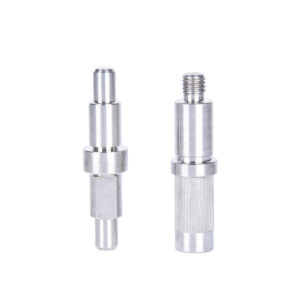
Modern manufacturing demands accuracy, consistency, and efficiency at a level that traditional methods can no longer sustain. As products become more complex and customer expectations continue to rise, manufacturers must adopt advanced technologies to stay competitive. One of the most influential innovations driving this transformation is precision cnc machining. This technology has reshaped how industries design, produce, and deliver high-quality components, enabling tighter tolerances, faster production cycles, and unmatched reliability.
From aerospace and automotive to medical and electronics manufacturing, CNC machining has become a cornerstone of industrial progress. Its ability to convert digital designs into flawless physical parts has elevated product quality while reducing waste, errors, and production costs.
What Is Precision CNC Machining?
Precision CNC machining is a manufacturing process where computer-controlled machines remove material from a workpiece to create highly accurate components. CNC stands for Computer Numerical Control, meaning the machine’s movements are guided by programmed instructions rather than manual operation.
Unlike conventional machining, CNC systems can repeatedly produce identical parts with microscopic accuracy. This ensures every component meets exact specifications, even in high-volume production environments. The process supports a wide range of materials, including metals, plastics, composites, and specialty alloys, making it versatile across industries.
The Role of CNC Machining in Industrial Transformation
The rise of automation has fundamentally changed manufacturing, and CNC machining sits at the center of this evolution. Industries that once relied heavily on manual labor now benefit from faster turnaround times and improved quality control.
By integrating CNC machining into production lines, companies can streamline workflows, reduce human error, and improve scalability. Designs that were once impossible or too expensive to manufacture are now achievable with high precision and repeatability. This capability allows businesses to innovate freely without compromising performance or safety.
Enhancing Product Quality Through Precision
Quality is no longer just a competitive advantage—it is an expectation. Precision machining enhances product quality by ensuring consistency across every part produced. Tight tolerances and smooth surface finishes improve performance, durability, and aesthetic appeal.
Components manufactured using precision cnc machining fit together seamlessly, reducing wear and tear during operation. This level of accuracy is critical in industries such as medical devices, where even minor deviations can impact patient safety, and aerospace, where precision directly affects flight performance.
Industry Applications of CNC Machining
Aerospace and Defense
Aerospace components require extreme accuracy due to the high-stress environments they operate in. CNC machining enables the production of lightweight yet durable parts that meet strict regulatory standards. From turbine blades to structural components, precision machining ensures safety and reliability at every stage.
Automotive Manufacturing
In the automotive sector, CNC machining supports the production of engine parts, transmission components, and custom performance pieces. The technology allows manufacturers to maintain consistency across thousands of parts while supporting rapid prototyping for new vehicle designs.
Medical and Healthcare
Medical devices demand the highest level of precision and cleanliness. CNC machining is widely used to create surgical instruments, implants, and diagnostic equipment. The process ensures biocompatibility, smooth finishes, and exact dimensions that meet regulatory requirements.
Electronics and Technology
As electronic devices become smaller and more complex, manufacturers rely on CNC machining to produce intricate components. Precision machining supports miniaturization while maintaining structural integrity and performance.
Supporting Innovation and Customization
One of the greatest advantages of CNC machining is its ability to support innovation. Designers can experiment with complex geometries, internal channels, and unique shapes that would be difficult or impossible with traditional methods.
Customization is also easier and more cost-effective. CNC machines can quickly switch between designs with minimal setup changes, allowing manufacturers to offer tailored solutions without sacrificing efficiency. This flexibility is particularly valuable for startups and industries that require rapid iteration.
Efficiency and Cost Optimization
While CNC machining involves advanced technology, it often leads to long-term cost savings. Automated processes reduce labor costs and material waste while improving production speed. Errors are minimized through precise programming and quality control measures.
By producing accurate parts on the first attempt, manufacturers avoid costly rework and downtime. Over time, this efficiency translates into higher profitability and improved customer satisfaction.
Sustainability and Responsible Manufacturing
Sustainability is becoming a key focus across industries, and CNC machining contributes positively to responsible manufacturing. Precision cutting reduces material waste, and efficient workflows lower energy consumption.
Many CNC facilities now integrate recyclable materials and eco-friendly practices into their operations. This alignment with sustainability goals helps businesses meet environmental standards while maintaining high production quality.
The Future of Precision CNC Machining
The future of manufacturing is closely tied to advancements in CNC technology. Innovations such as artificial intelligence, machine learning, and smart automation are enhancing the capabilities of CNC machines. These developments allow for predictive maintenance, real-time quality monitoring, and even greater accuracy.
As industries continue to evolve, precision cnc machining will remain a driving force behind innovation, efficiency, and superior product quality. Companies that invest in this technology position themselves for long-term success in an increasingly competitive market.
Conclusion
Precision CNC machining has transformed the manufacturing landscape by delivering unmatched accuracy, consistency, and efficiency. Its impact spans multiple industries, enabling the production of high-quality components that meet modern performance and safety standards. By enhancing product quality, supporting innovation, and optimizing costs, CNC machining empowers businesses to stay ahead in a rapidly changing world. As technology advances, its role will only grow stronger—shaping the future of manufacturing and redefining what is possible.