
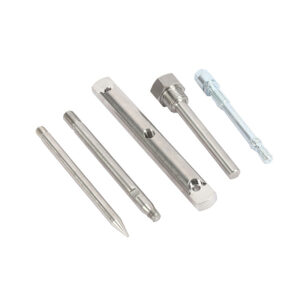
In today’s highly competitive manufacturing environment, efficiency is no longer optional—it is essential. Across global supply chains, manufacturers are under pressure to deliver higher quality products faster, at lower cost, and with minimal environmental impact. This is where modern CNC technology plays a critical role. Advanced CNC factories are transforming how components are produced by reducing material waste, optimizing processes, and dramatically increasing output without compromising precision.
In China, where manufacturing scale meets technological innovation, companies like Newtop Industry Group are setting new standards for smart, efficient production. This page explores how CNC factories achieve these goals and why their methods matter for industries worldwide.
The Evolution of CNC Manufacturing Efficiency
Computer Numerical Control (CNC) machining has evolved far beyond simple automated cutting. Early CNC systems focused mainly on repeatability. Today’s factories integrate software, data analytics, automation, and lean manufacturing principles to create intelligent production ecosystems.
A modern cnc machining parts factory is no longer just a place with machines—it is a connected environment where every step, from raw material input to final inspection, is optimized for efficiency. This evolution allows manufacturers to reduce errors, lower scrap rates, and maintain consistent quality at scale.
Smart Material Planning: The First Step in Waste Reduction
One of the biggest sources of waste in traditional manufacturing is poor material planning. Excess stock, incorrect sizing, and inefficient cutting paths all contribute to unnecessary scrap.
Advanced CNC factories tackle this issue at the planning stage. Using CAD/CAM software, engineers simulate the entire machining process before production begins. This ensures:
- Optimal nesting of parts to maximize material usage
- Accurate estimation of raw material requirements
- Reduced trial-and-error during production
In a Chinese manufacturing environment, where large volumes are common, this digital planning significantly cuts waste while maintaining flexibility for custom orders.
Precision Machining: Cutting Only What’s Needed
Precision is at the heart of CNC machining. High-accuracy tools and multi-axis machines allow manufacturers to remove only the material required to achieve the final shape. This level of control minimizes excess cutting and reduces rework.
A well-managed cnc machining parts factory uses high-quality tooling, calibrated machines, and real-time monitoring to maintain tight tolerances. This precision leads to:
- Fewer rejected parts
- Lower material consumption per unit
- Consistent quality across large production runs
The result is a process that is both cost-effective and environmentally responsible.
Automation and Robotics: Reducing Human Error and Downtime
Automation is one of the most powerful drivers of waste reduction and output growth. Robotic loading and unloading systems, automated tool changers, and pallet systems allow CNC machines to run continuously with minimal interruption.
In China’s advanced manufacturing sector, automation enables factories to operate 24/7 while maintaining consistent quality. By reducing reliance on manual handling, manufacturers lower the risk of errors, damage, and production delays.
Within a modern cnc machining parts factory, automation contributes to:
- Faster cycle times
- Reduced labor-related variability
- Higher machine utilization rates
These advantages directly translate into higher output without increasing waste.
Real-Time Monitoring and Data-Driven Decisions
One of the biggest advantages of modern CNC factories is their ability to collect and analyze data in real time. Sensors track spindle load, tool wear, vibration, and temperature, allowing operators to detect issues before they cause defects or downtime.
Data-driven manufacturing helps factories:
- Predict tool replacement needs
- Prevent machine failures
- Optimize cutting parameters for efficiency
By acting on real-time insights, a cnc machining parts factory can continuously refine its processes, reducing scrap and improving productivity over time.
Lean Manufacturing Principles in CNC Operations
Lean manufacturing focuses on eliminating non-value-added activities. When combined with CNC technology, lean principles become even more powerful.
Key lean practices in CNC factories include:
- Streamlined workflows to reduce material handling
- Standardized setups for faster changeovers
- Just-in-time production to minimize inventory waste
Chinese manufacturers are particularly effective at integrating lean systems with CNC automation, allowing them to scale production efficiently while maintaining tight control over costs and waste.
Advanced Tooling and Longer Tool Life
Tool wear is a hidden source of waste. Dull or damaged tools lead to poor surface finish, dimensional inaccuracies, and rejected parts. Modern CNC factories invest heavily in advanced tooling materials and coatings to extend tool life.
With proper tool management systems, factories can:
- Track tool usage accurately
- Replace tools at the optimal time
- Maintain consistent machining quality
This approach reduces both material waste and downtime, helping boost overall output.
Energy Efficiency and Sustainable Production
Waste reduction is not limited to materials alone. Energy consumption is a major cost and environmental concern in machining operations. Today’s CNC machines are designed to be more energy-efficient, using intelligent power management systems and optimized cutting strategies.
In China, where sustainability is becoming a strategic priority, CNC factories are adopting practices such as:
- Energy-efficient spindle motors
- Optimized machine idle times
- Smart factory layouts to reduce energy loss
These efforts contribute to greener manufacturing while improving long-term profitability.
Quality Control Built into the Process
Traditional quality control often happens after production, leading to wasted time and materials if defects are found. Modern CNC factories integrate inspection directly into the machining process.
In-process probing and automated measurement systems allow manufacturers to verify dimensions during production. This ensures errors are corrected immediately, preventing large batches of defective parts.
A highly efficient cnc machining parts factory treats quality control as a continuous process, not a final step. This approach significantly reduces scrap and rework.
Faster Turnaround Without Compromising Accuracy
One of the most impressive achievements of advanced CNC factories is their ability to deliver faster turnaround times without sacrificing precision. By combining automation, optimized workflows, and skilled engineering, factories can meet tight deadlines even for complex components.
For global clients sourcing from China, this means:
- Reliable delivery schedules
- Consistent product quality
- Competitive pricing at scale
Efficiency becomes a strategic advantage rather than just an operational goal.
The Role of Skilled Engineers and Continuous Improvement
While machines and software are essential, human expertise remains critical. Skilled engineers program, monitor, and continuously improve CNC processes. Training and experience allow teams to fine-tune parameters, select the best tools, and adapt quickly to new product requirements.
At Newtop Industry Group, continuous improvement is embedded in the manufacturing culture. By combining skilled talent with advanced CNC systems, the company ensures long-term efficiency and innovation.
Why CNC Efficiency Matters for Global Industries
From automotive and aerospace to medical and electronics, industries depend on reliable, high-precision components. Waste reduction and output optimization are not just cost-saving measures—they are essential for maintaining competitiveness and meeting global quality standards.
A trusted cnc machining parts factory enables businesses to scale production, reduce environmental impact, and respond quickly to market demands.
Conclusion:
CNC factories have become powerful engines of efficiency by cutting waste and boosting output through smart planning, automation, data-driven decisions, and skilled engineering. In China, manufacturers like Newtop Industry Group are leading this transformation, delivering high-quality results while embracing sustainable practices. As global industries continue to evolve, partnering with a forward-thinking cnc machining parts factory is no longer just a sourcing decision—it is a strategic investment in efficiency, quality, and long-term success.