
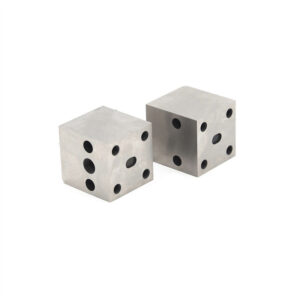
Precision is the foundation of modern manufacturing. When tolerances are tight and performance cannot be compromised, cnc machining parts become the preferred solution for engineers, OEMs, and industrial manufacturers worldwide. These parts are produced using computer-controlled machines that ensure accuracy, consistency, and efficiency at every stage of production.
In today’s competitive market, manufacturers are under constant pressure to reduce lead times, control costs, and maintain strict quality standards. CNC machining meets these demands by delivering parts that match exact design specifications, whether for one-off prototypes or large-scale production runs.
This article explores how CNC machining parts are made, where they are used, their advantages, and what businesses should look for in a reliable machining partner.
Understanding CNC Machining Parts
CNC machining parts are components manufactured using automated machining systems guided by digital programs. Unlike traditional machining methods, CNC machines follow precise instructions derived from CAD models, eliminating human error and variation.
This approach allows manufacturers to produce parts that feature:
- Exact dimensions and tolerances
- Complex geometries
- Smooth and repeatable finishes
- High structural integrity
Because of these characteristics, CNC machining parts are widely used in applications where reliability and accuracy are essential.
The CNC Machining Process Explained
CAD-Based Engineering Design
Every project begins with a digital CAD drawing. This model defines every detail of the part, including size, shape, tolerance, and function.
Toolpath Programming
CAM software converts the CAD design into machine-readable instructions. These instructions control cutting tools, speeds, and movements.
Precision Material Cutting
The CNC machine removes material with controlled motion using milling, turning, drilling, or multi-axis machining techniques.
Dimensional Verification
After machining, parts are measured and inspected to ensure they meet technical drawings and quality standards.
Types of CNC Machining Parts
A capable manufacturer can deliver a wide range of CNC machining parts to suit different industries and applications.
Precision Milled Components
- Suitable for flat and multi-surface designs
- Commonly used in enclosures, frames, and mounting plates
- Excellent dimensional stability
CNC Turned Components
- Designed for round or cylindrical shapes
- Used in shafts, pins, couplings, and bushings
- High concentric accuracy
Complex Multi-Axis Parts
- Produced using 4-axis or 5-axis machines
- Ideal for intricate designs and tight tolerances
- Fewer setups and improved accuracy
Prototype and Batch Production Parts
- Functional prototypes for testing
- Low-volume custom production
- High-volume repeat manufacturing
Materials Used for CNC Machining Parts
Material selection directly impacts performance, durability, and cost. Professional CNC machining supports a broad range of materials.
Metal Options
- Aluminum: Lightweight, corrosion-resistant, and easy to machine
- Stainless Steel: High strength and wear resistance
- Carbon Steel: Strong and economical for structural components
- Brass & Copper: Ideal for electrical and thermal applications
Engineering Plastics
- ABS for impact resistance
- Nylon for strength and flexibility
- POM (Delrin) for low friction parts
- PTFE for chemical resistance
Each material is chosen based on the part’s mechanical, thermal, and environmental requirements.
Advantages of CNC Machining Parts
Exceptional Accuracy
CNC machines achieve tolerances that manual processes cannot reliably maintain.
Consistent Quality
Every part produced matches the original design, regardless of quantity.
Faster Production Cycles
Automation reduces setup and machining time.
Design Versatility
Complex shapes and fine features are easily achievable.
Cost Control
Reduced waste and rework lower overall manufacturing costs.
Applications Across Industries
CNC machining parts are essential across multiple sectors, including:
- Automotive Manufacturing: Engine mounts, brackets, transmission components
- Aerospace: Structural and precision-critical parts
- Medical Equipment: Device housings and mechanical components
- Electronics: Heat sinks, casings, and connectors
- Industrial Machinery: Gears, fixtures, and custom assemblies
Each industry benefits from the repeatability and reliability of CNC machining.
Quality Assurance in CNC Machining
Quality control is integral to CNC machining, not an afterthought. Reputable manufacturers implement:
- In-process monitoring
- Final dimensional inspection
- Precision measuring equipment
- Documented inspection records
This systematic approach ensures that every CNC machining part meets performance and compliance requirements.
Choosing the Right CNC Machining Partner
Selecting a supplier for CNC machining parts requires careful evaluation.
Manufacturing Capability
- Advanced CNC equipment
- Multi-axis machining availability
- Wide material support
Technical Expertise
- Engineering and design assistance
- Industry-specific experience
- Problem-solving capability
Quality Commitment
- Consistent inspection procedures
- Traceable production processes
- Strong quality culture
Communication and Reliability
- Clear timelines
- Transparent updates
- Responsive support
A reliable partner contributes to smoother production and long-term success.
CNC Machining and the Future of Manufacturing
CNC machining continues to evolve alongside modern manufacturing trends, including:
- Smart factory integration
- Digital production tracking
- Process optimization through data
- Automation and lean manufacturing
These advancements enhance efficiency, accuracy, and scalability for global manufacturers.
Conclusion: Precision CNC Machining Parts You Can Rely On
In industries where accuracy and performance are critical, cnc machining parts provide a dependable manufacturing solution. From early-stage prototypes to high-volume production, CNC machining delivers precision, consistency, and reliability at every level.
Partnering with an experienced CNC machining provider allows businesses to reduce risk, improve product quality, and meet demanding production schedules with confidence.
If you are planning your next manufacturing project, connect with a trusted CNC machining expert to discuss customized, high-precision solutions tailored to your needs.