
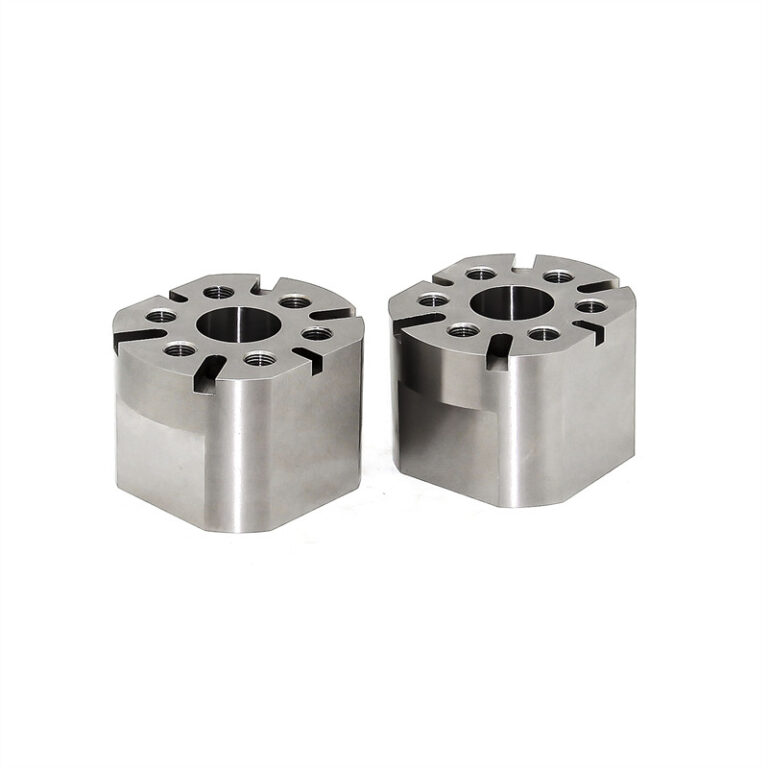
Modern manufacturing depends on accuracy, consistency, and efficient production. That is why cnc manufacturing has become an important part of industries that need dependable components and repeatable results. From prototypes to large production runs, CNC technology helps manufacturers turn digital designs into precise physical parts.
For businesses looking for reliable engineering solutions, Newtop Industry Group focuses on practical manufacturing needs where quality and precision matter. The right CNC process can reduce production errors, improve consistency, and support complex designs without making the workflow unnecessarily complicated.
What Makes CNC Manufacturing So Important?
CNC stands for Computer Numerical Control. A CNC machine follows programmed instructions to cut, drill, mill, turn, or shape a material according to a digital design.
Unlike traditional manual machining, CNC equipment can repeat the same movements with a high level of consistency. Once the program and setup are properly prepared, the machine can produce multiple components with very similar dimensions.
This makes CNC technology useful when a project requires:
- Accurate dimensions
- Repeatable production
- Complex shapes
- Consistent surface quality
- Faster production cycles
- Custom component designs
- Controlled material usage
As a result, manufacturers can handle both simple and highly detailed components with greater confidence.
How CNC Manufacturing Works
The process usually starts with a digital design. Engineers create a 2D drawing or 3D model that defines the required dimensions, features, and tolerances.
Next, the design is converted into machine instructions. These instructions guide the CNC equipment through a series of controlled movements.
A typical workflow includes:
- Design preparation – The component is designed using CAD software.
- Programming – The design is converted into machine-readable instructions.
- Material selection – The correct metal, plastic, or other material is chosen.
- Machine setup – Tools, fixtures, speeds, and cutting parameters are prepared.
- Machining – The CNC machine removes or shapes material according to the program.
- Inspection – The finished component is checked against the required specifications.
- Finishing – Additional treatments or finishing operations may be applied when needed.
Each stage contributes to the final quality. Therefore, good planning before machining is just as important as the machine itself.
Key Benefits of CNC Manufacturing
High Precision
One of the biggest advantages of CNC machining is precision. Computer-controlled movements help maintain consistent dimensions throughout production.
This is especially important for components that must fit with other parts. Even a small dimensional difference can create assembly problems, excess wear, or poor performance.
With a properly prepared process, manufacturers can produce components that meet detailed engineering requirements more consistently.
Consistent Production
Consistency becomes increasingly important when a business needs hundreds or thousands of similar components.
Manual machining can depend heavily on individual operator technique. CNC equipment, however, follows programmed instructions. Once the process is validated, the same sequence can be repeated across production batches.
For example, imagine a company producing a metal housing that must connect with several other components. Every housing needs the same hole locations and dimensions. A controlled CNC process can help maintain that consistency from one part to the next.
Better Production Efficiency
Time is another major factor in manufacturing.
Automated machining reduces the need for repeated manual operations. A well-planned CNC workflow can also reduce unnecessary movement, improve cutting efficiency, and shorten production cycles.
Consequently, businesses may be able to respond to orders more efficiently while maintaining production quality.
Complex Designs
Modern products often contain shapes that are difficult to produce through conventional methods.
CNC machining can handle many complex geometries, including:
- Detailed pockets
- Precise holes
- Grooves
- Curved surfaces
- Threads
- Custom profiles
- Multi-feature components
This flexibility gives engineers more freedom when developing new products or improving existing designs.
Materials Commonly Used in CNC Machining
The material selected for a component depends on its purpose, environment, strength requirements, weight, and budget.
Common CNC machining materials include:
Aluminum
Aluminum is lightweight and relatively easy to machine. It is often considered when weight reduction and corrosion resistance are important.
Stainless Steel
Stainless steel offers strength and corrosion resistance. It can be useful for components exposed to demanding environments.
Carbon Steel
Carbon steel provides strength and durability for many industrial applications. Different grades can be selected according to the required mechanical properties.
Brass
Brass machines well and offers useful wear and corrosion characteristics. It is commonly considered for smaller precision components.
Engineering Plastics
Certain plastics can also be machined using CNC equipment. They may be selected when a project requires low weight, electrical insulation, chemical resistance, or specific performance characteristics.
Choosing the right material early can help prevent performance problems later in the manufacturing process.
CNC Manufacturing for Prototypes and Custom Parts
CNC technology is not limited to high-volume production.
It can also support prototyping and low-volume manufacturing. This is useful when engineers need to test a new product before committing to a larger production run.
For example, a product team may have a new enclosure design. Instead of immediately producing thousands of units, they can create a smaller batch of machined prototypes.
These prototypes can then be tested for:
- Fit
- Function
- Strength
- Dimensions
- Assembly
- Appearance
After testing, the design can be adjusted before full production begins.
This approach can help identify problems earlier and reduce expensive changes later in the development process.
Choosing the Right CNC Manufacturing Partner
Selecting a manufacturing partner involves more than checking whether a company owns CNC machines.
Businesses should consider the complete production process.
Review Engineering Capabilities
A capable manufacturing partner should understand drawings, tolerances, materials, machining requirements, and production challenges.
Clear technical communication can prevent misunderstandings before production starts.
Check Quality Processes
Quality control should be part of the manufacturing workflow rather than an afterthought.
Ask how components are inspected and how dimensional requirements are verified. A structured inspection process can help identify issues before parts reach the customer.
Consider Production Capacity
A supplier may be suitable for prototypes but struggle with larger orders. Therefore, consider whether the manufacturer can support your expected production volume and future growth.
Look at Communication
Good communication can make a major difference.
A reliable partner should be able to discuss design questions, material choices, production timelines, and potential manufacturing concerns clearly.
Common Applications of CNC Manufacturing
CNC machining supports many industries because the technology can be adapted to different component requirements.
Common applications include:
- Automotive components
- Industrial machinery parts
- Equipment housings
- Mechanical assemblies
- Custom brackets
- Shafts and fittings
- Precision tools
- Prototypes
- Replacement components
- Specialized engineering parts
For instance, an industrial equipment manufacturer may need a custom bracket with exact mounting holes. CNC machining can produce the bracket according to the approved engineering drawing, helping it fit the final assembly correctly.
How to Improve CNC Production Results
Good results do not depend on machining alone. Design and planning also play important roles.
Start with accurate technical drawings. Make sure dimensions, tolerances, material specifications, and critical features are clearly defined.
Next, consider how the part will actually be machined. Some design features may increase production time or require additional tooling.
A few practical steps include:
- Keep drawings clear and complete.
- Identify critical dimensions.
- Choose suitable materials.
- Avoid unnecessary design complexity.
- Discuss difficult features before production.
- Inspect samples before larger production runs.
- Maintain clear communication with the supplier.
By considering manufacturability early, businesses can often avoid unnecessary production challenges.
The Future of CNC Manufacturing
Manufacturing technology continues to evolve. CNC systems are becoming increasingly connected with digital design, automation, inspection, and data-driven production methods.
Automation can help reduce repetitive manual work. Better software can improve programming and simulation. Advanced inspection systems can also make it easier to identify dimensional variations.
At the same time, manufacturers are looking for ways to reduce waste and use materials more efficiently.
These developments are making CNC machining more adaptable to modern production requirements. However, technology alone is not enough. Skilled engineering, careful planning, and strong quality control remain essential.
Why Precision Matters in Modern Manufacturing
A component may look simple, but its dimensions can have a major effect on the final product.
Consider a shaft that needs to fit inside a bearing. If its diameter is too large, assembly may become difficult. If it is too small, unwanted movement can occur.
The same principle applies to holes, threads, mounting surfaces, and connecting components.
That is why precision manufacturing is not simply about making a part look accurate. It is about ensuring that the part performs its intended function.
Newtop Industry Group understands the importance of dependable engineering and manufacturing solutions for businesses that require consistent components and practical production support.
Conclusion
Modern manufacturing requires more than speed. Businesses need accuracy, consistency, flexibility, and dependable production processes. Cnc manufacturing helps meet these needs by combining digital design with controlled machining operations.
From prototypes and custom components to repeat production, CNC technology can support a wide range of engineering requirements. Its ability to produce complex parts with repeatable results makes it a valuable option for many industries.
The best results come from combining suitable equipment with careful design, material selection, programming, inspection, and communication. When these elements work together, manufacturers can improve quality while keeping production efficient. If your business needs reliable machining solutions or wants to turn an engineering design into a precise component, Newtop Industry Group can be a practical partner to consider. Start with your specifications, discuss your requirements with the engineering team, and choose a production approach built around quality and long-term performance.