
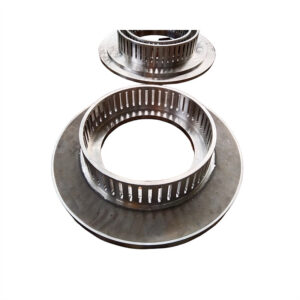
In today’s fast-paced manufacturing environment, companies are under constant pressure to deliver superior products faster, at lower cost, and with uncompromising quality. Among the many advanced production methods shaping modern industry, precision sheet metal fabrication stands out as a critical process that directly impacts both product quality and operational efficiency. From consumer electronics and medical devices to aerospace and automotive components, this specialized manufacturing approach ensures consistency, accuracy, and scalability.
This article explores how precision sheet metal fabrication enhances product quality, streamlines production processes, and supports long-term business growth. By understanding its role and benefits, manufacturers can make more informed decisions that strengthen their competitive edge.
Understanding Precision Sheet Metal Fabrication
Sheet metal fabrication is a manufacturing process that transforms flat sheets of metal into functional components using cutting, bending, forming, and assembling techniques. What makes precision fabrication unique is its reliance on advanced machinery, strict tolerances, and highly controlled workflows. The focus is on achieving exact measurements, smooth finishes, and repeatable accuracy across every unit produced.
Common materials include stainless steel, aluminum, copper, brass, and carbon steel. Each material brings unique properties related to strength, corrosion resistance, conductivity, and weight. Precision methods ensure that these materials are shaped without compromising their structural integrity or performance characteristics.
Modern fabrication facilities use a combination of CNC (computer numerical control) machines, laser cutting systems, automated press brakes, and robotic welding. This technology-driven approach minimizes errors and delivers consistent, high-quality output at scale.
Enhancing Product Quality Through Precision
Product quality is defined by accuracy, durability, reliability, and visual appeal. Precision fabrication contributes to all of these factors in several key ways.
1. Tight Tolerances and Exact Specifications
Precision equipment allows manufacturers to meet extremely tight tolerances, often within fractions of a millimeter. This level of accuracy ensures that every part fits perfectly into the final assembly. Consistent dimensions reduce mechanical stress, prevent vibration issues, and improve overall system reliability.
2. Superior Surface Finishes
High-quality surface finishes are not just about aesthetics. They also affect corrosion resistance, electrical conductivity, and cleanliness—especially in industries such as medical devices and electronics. Precision fabrication reduces surface defects, burrs, and inconsistencies that could otherwise compromise performance.
3. Structural Integrity and Strength
Accurate forming and bending techniques ensure that metal parts maintain their designed strength. Controlled handling minimizes micro-fractures, warping, or unintended material thinning. This is critical for load-bearing components and parts exposed to challenging environments.
4. Consistency Across Production Runs
One of the greatest advantages of precision sheet metal fabrication is repeatability. Once a design is programmed into CNC machinery, thousands of identical parts can be produced with the same level of accuracy. This uniformity is essential for brands that depend on reliable production quality and predictable performance.
Improving Manufacturing Efficiency
Beyond quality, efficiency is the second major benefit of precision fabrication. Streamlined workflows, automation, and digital integration significantly reduce production time and cost.
1. Faster Production Cycles
Automated cutting and forming equipment processes metal far more quickly than traditional manual methods. Laser cutting, for example, can handle complex shapes at high speed without sacrificing accuracy. Faster cycle times mean shorter lead times and improved ability to meet market demand.
2. Reduced Material Waste
Precision fabrication optimizes material usage through smart nesting software and accurate cutting paths. By minimizing scrap and off-cuts, manufacturers reduce raw material expenses and support sustainable production practices.
3. Lower Error Rates and Rework
Manual fabrication is susceptible to human error, which can lead to rejected parts and expensive rework. Precision systems greatly reduce these risks by following exact digital instructions. Fewer errors translate directly into cost savings and improved delivery schedules.
4. Seamless Integration with Digital Design
Modern fabrication is closely tied to CAD (computer-aided design) and CAM (computer-aided manufacturing) systems. Designs move directly from engineering to production without manual interpretation. This digital continuity eliminates miscommunication and accelerates prototyping and iteration.
Industry Applications and Impact
The benefits of precision fabrication extend across numerous sectors, each with unique requirements for quality and efficiency.
- Automotive Manufacturing: High-precision bracketry, chassis components, and enclosures must meet strict safety and performance standards. Even minor dimensional errors can affect vehicle handling and safety.
- Aerospace: Aircraft components demand exceptional accuracy, lightweight strength, and reliability under extreme conditions. Precision fabrication ensures compliance with rigorous regulatory standards.
- Medical Devices: Clean edges, smooth finishes, and exact tolerances are essential for surgical tools, diagnostic equipment, and enclosures. Precision manufacturing supports patient safety and regulatory approval.
- Electronics and Telecommunications: Enclosures, racks, and mounting systems must protect sensitive circuits while maintaining precise alignment and thermal management.
- Industrial Equipment: Durable, custom-fabricated components improve machine uptime and reduce maintenance needs.
In each of these industries, precision directly influences performance, safety, and customer satisfaction.
Customization Without Compromising Efficiency
One of the most powerful aspects of modern fabrication is the ability to deliver customization at scale. Unlike traditional manufacturing methods that struggle with small production runs, precision systems easily adapt to custom designs.
Manufacturers can modify dimensions, cutouts, bends, and finishes with minimal changes to tooling. This flexibility allows businesses to offer tailored solutions for specific applications while maintaining efficient production workflows. Customization no longer means higher risk or lower efficiency—it becomes a strategic advantage.
Supporting Cost Control and Profitability
Although precision fabrication requires an initial investment in advanced machinery and skilled labor, the long-term return is substantial. Reduced waste, lower rework rates, faster turnaround times, and improved product reliability all contribute to stronger profitability.
High-quality parts also reduce warranty claims, product recalls, and post-sale maintenance issues. Over time, these indirect cost savings often exceed the direct manufacturing benefits. When quality is built into the process rather than inspected at the end, overall business risk is significantly reduced.
The Role of Skilled Expertise
Technology alone does not guarantee quality. Skilled engineers, machine operators, and quality control specialists play a vital role in achieving true precision. Their experience ensures proper machine calibration, process optimization, and rapid problem resolution.
Design for manufacturability (DFM) is another critical factor. When engineers collaborate closely with fabrication specialists during the design phase, components can be optimized for both performance and production efficiency. This proactive approach prevents costly redesigns and production delays later in the project lifecycle.
Quality Control and Inspection as a Performance Backbone
Precision fabrication relies heavily on systematic quality control. Advanced inspection tools such as coordinate measuring machines (CMM), laser scanners, and digital gauges verify that each part meets design specifications.
Statistical process control (SPC) techniques track variations and identify potential issues before they affect production output. This data-driven approach allows manufacturers to maintain consistent quality across large volumes while continuously improving their processes.
Sustainability and Environmental Benefits
Efficiency in fabrication also supports sustainability goals. Reduced material waste, optimized energy use, and longer-lasting components all contribute to a smaller environmental footprint. Lightweight, precisely fabricated parts can improve energy efficiency in vehicles and machinery, reducing fuel or power consumption over the product’s lifetime.
Furthermore, the ability to use recyclable metals such as aluminum and steel aligns with circular economy principles. Precision manufacturing ensures that these materials are used efficiently, maximizing their environmental and economic value.
Innovation and Future-Ready Manufacturing
As industrial technologies continue to evolve, precision fabrication remains at the center of manufacturing innovation. Integration with smart factories, IoT-enabled machines, and AI-driven process optimization is already transforming how metal components are produced.
Additive manufacturing, hybrid fabrication techniques, and digital twins are further expanding the capabilities of precision fabrication. These advancements allow manufacturers to simulate performance, predict outcomes, and refine designs before any physical material is cut.
By adopting precision sheet metal fabrication, businesses position themselves at the forefront of this technological evolution, ready to meet future demands with confidence.
Final Thoughts
The role of precision sheet metal fabrication in enhancing product quality and efficiency cannot be overstated. It delivers unmatched accuracy, consistent performance, faster production cycles, and significant cost savings across a wide range of industries. More importantly, it enables manufacturers to meet rising customer expectations while maintaining operational excellence. In a competitive global market, where quality and efficiency define success, precision fabrication is not merely a production method—it is a strategic investment in reliability, innovation, and long-term growth. Manufacturers that embrace this approach are better equipped to deliver superior products, strengthen their brand reputation, and thrive in an increasingly demanding industrial landscape.